Art Forms of India
A Kaleidoscope of Culture: A Beginner’s Guide to Indian Art Forms in 2026
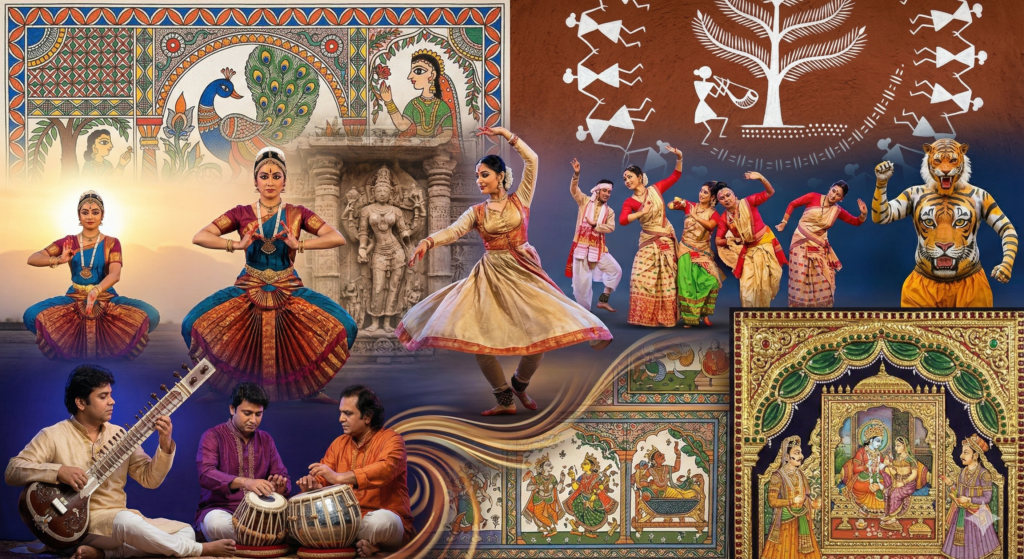
The many forms of Indian art showcase the subcontinent’s rich cultural history beautifully. These art forms have changed over thousands of years to show the spiritual and social essence of their regions. The different art forms of India, like the detailed Madhubani paintings from Bihar, the bright Warli folk art from Maharashtra, classical dance, and beautiful temple architecture, tell the story of India’s rich history and many different cultures. These artistic expressions have been passed down through generations. They not only keep local myths and legends alive, but they also continue to inspire artists all over the world.
Each art form provides an intriguing window into India’s history, customs, and beliefs, from the elaborate brushstrokes of miniature painting to the striking geometric patterns of warli painting. Indian art forms.
With a geography that includes mountains and tropical coasts and thousands of years of history, the question is not only “What is Indian art?” but also “How can one land hold so much beauty?”
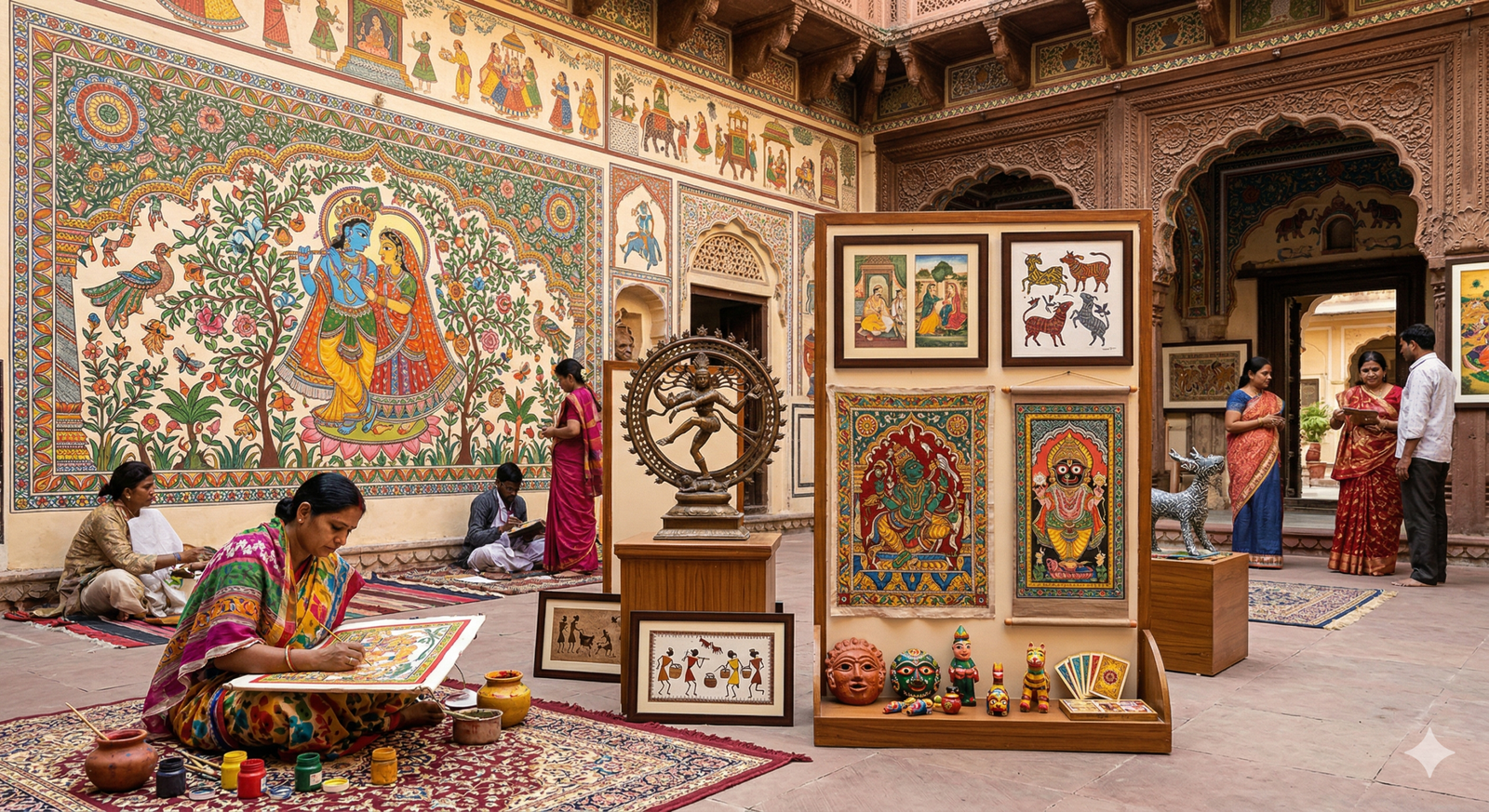
In 2026, entering India would be more than simply entering a nation; it would be entering a living, breathing gallery. Indian art is not a relic found only in dusty museums; it is displayed on top-notch stages in New Delhi and Mumbai, painted on the walls of village homes, and sewn into the fabric of common clothing. The sheer size can be daunting to a novice. Have you ever pondered the diverse array of artistic expressions that flourish within India’s multifaceted cultural milieu?
What Is the Total Number of Art Forms?
Quantifying Indian art is like trying to count the colors in a sunset .Nonetheless, academics typically divide them into three primary pillars

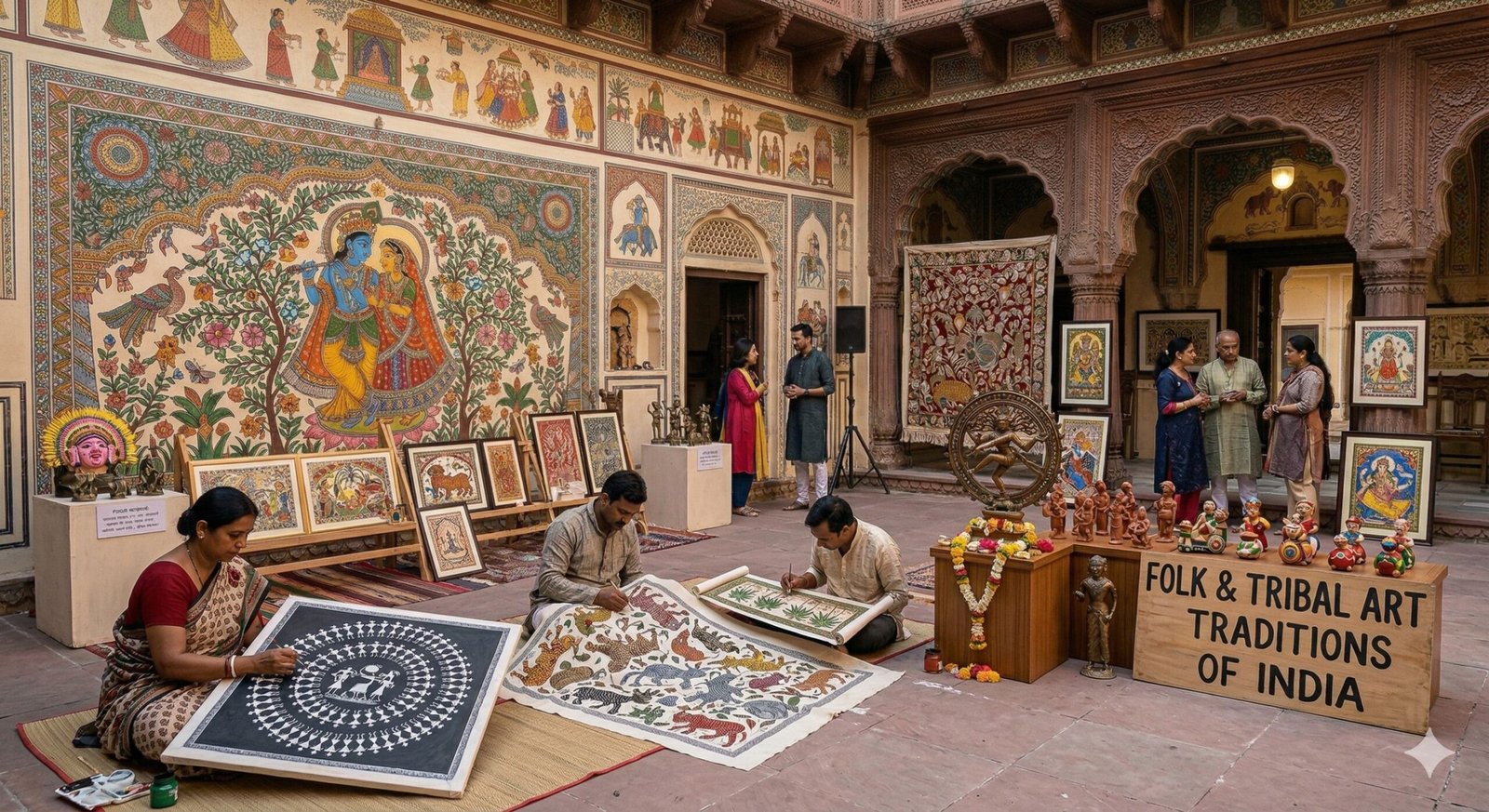
Uniqueness: What Makes Them Different?
- Classical vs. Folk: Classical arts (like Bharatanatyam) are “Shastric,” meaning they follow strict rules laid out in ancient texts like the Natya Shastra. They require years of formal training. Folk arts (like Warli) are “spontaneous,” passed down through families, and used to celebrate harvests or weddings.
- The Medium: A Tanjore painting is famous for its three-dimensional feel, using real gold foil and precious stones. In contrast, Warli art from Maharashtra is minimalist, using only white pigment (rice paste) on a red-brown background.
Quick Reference: Iconic Indian Art Forms
|
Art Form
|
Region
|
Unique Feature
|
|---|---|---|
The Golden Thread: How Art Forms are Linked
In India, art is never an island. There is a concept called Sangam (confluence), where different disciplines bleed into one another.
Literature and Painting
Most traditional paintings (like Pattachitra or Phad) are visual “storybooks.” They don’t just exist for beauty; they illustrate the epics like the Ramayana or local folk legends.
Architecture and Dance
If you visit the ancient temples of Khajuraho or Konark, you’ll see the “interconnectedness” instantly. The sculptures on the temple walls are frozen in dance poses (mudras) that are still used by classical dancers today.
Music and Rhythm
You cannot have the footwork of a Kathak dancer without the rhythmic pulse of a Tabla or Pakhawaj. The art is a conversation between the visual movement and the audible sound.
Why it Matters in 2026
- As we navigate 2026, Indian art is undergoing a “Digital Renaissance.” Young artists are using iPads to create Madhubani-inspired NFTs, and the India Art Fair 2026 showcased how AI is being used to archive dying folk languages and motifs. Is this the beginning of cognitive era of Indian Heritage…
Yet, the heart remains the same: a deep respect for nature, a love for storytelling, and a belief that art is a spiritual bridge.
For a beginner, the best way to understand Indian art is not to memorize a list, but to look at a single piece of Warli or Gond art and ask: What story is this telling? You’ll find that in India, every line has a legend, and every color has a soul.