

The Magic Green House: How India is Growing the Future of Food
Imagine a place where, despite a blizzard outside, it is always summer. A place where insects are not permitted without permission and plants grow ten times more quickly. This is the everyday reality of a greenhouse, not a scene from a science fiction film.
In essence, a greenhouse is an advanced “survival pod” for plants. Typically constructed from glass or transparent plastic, it functions as a haven that makes the vision of enormous harvests a reality. But why is it altering our eating habits, particularly in a nation as diverse as India, and how does it operate? Let’s dissect it!
The “Greenhouse Effect”: Nature’s Secret Heater
The greenhouse effect is these structures’ hidden power. If you have ever entered a car that has been parked in the sun on a cold day, you have undoubtedly experienced this. Isn’t the interior toasty?
1. Light Sneaks in: The transparent panels allow sunlight to enter.
2. Heat Gets Trapped: The light becomes trapped when it strikes the floor and plants.
3. The Glass Shield: Heat finds it difficult to return, but light can enter with ease.
Farmers are able to grow everything from delicate tropical flowers to enormous, robust vegetables because of this trapped warmth, which mimics ideal growing conditions.
From Humble Beginnings to Modern Marvels
Greenhouses are not a recent development. The Romans cultivated out-of-season cucumbers for Emperor Tiberius using thin sheets of a mineral called mica in the first century AD. In order to shield citrus trees from severe winters, European botanists constructed “orangeries” later in the 17th century.
Today, more than 500,000 hectares are used for greenhouse cultivation worldwide. This practice is booming in India! Greenhouses, also known as polyhouses in India due to their use of polyethylene film, have become indispensable for farmers due to the country’s extreme weather, which ranges from heavy monsoons to extreme heatwaves.
Where is this happening in India?
States like Karnataka, Maharashtra, Haryana, and Gujarat are leading the way. In Karnataka, a special government program called Krishi Bhagya helps thousands of farmers set up these structures. Whether it’s growing “Dutch Roses” for export or “Colored Capsicum” (bell peppers) for city supermarkets, Indian farmers are using this technology to earn more money from smaller pieces of land.
Five Ways Greenhouses Are Changing the World-Benefits for Growth and Sustainability
1.The Season Extension “Time Machine” Effect
Winter in many regions of the world is a” no grow zone”. However, greenhouses function as time machines. Farmers can grow tomatoes and peppers from early spring until late fall in cold climates. As a result, they are able to produce food for twice in a year.
2.The Sustainability “Water Ninja”
Greenhouses are environmental advocates. They employ drip irrigation, which delivers microscopic water droplets precisely where the plant requires them—at the roots. Water use can be reduced by up to 50% as a result. Furthermore, compared to field tomatoes, greenhouse tomatoes actually need 30% less land.
3.Reducino’s “Local Legend”(Reducing Food Miles)
Instead of flying a tomato halfway around the world, we can grow it in a greenhouse just down the street. This reduces “food miles,” which lowers the pollution from trucks and planes.
4.The “Super Farm” (10x More Food)
Although there isn’t much room on Earth, greenhouses are very effective. Greenhouse crops can produce up to ten times more food per square foot than a typical outdoor farm because of the “optimized” conditions (perfect light, perfect water, and perfect heat).
5.The “Ultimate Bodyguard” (Defense)
There are bullies in nature. A farmer’s laborious efforts can be ruined in a single afternoon by frost, hail, torrential rain, and intense heat. Plants are protected from these extremes by greenhouses. For instance, many greenhouse operations remained completely safe during the 2021 Texas freeze that destroyed outdoor crops. Additionally, they serve as a physical barrier against fungal diseases and pests like aphids, allowing us to use far fewer chemical pesticides.
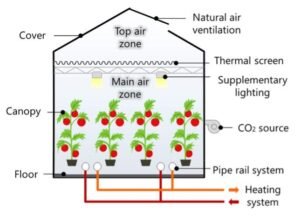
Components of Greenhouse
How to Be a “Plant Chef” (Daily Maintenance): Keeping Your Greenhouse Thriving
A greenhouse is only as good as its upkeep. Daily maintenance isn’t just a chore—it’s the heartbeat that ensures vibrant growth and prevents costly setbacks. Consistency in these routines maximizes productivity, wards off problems like mold or infestations, and turns your space into a productive haven. Here’s a step-by-step guide to essential daily tasks, tailored for both novice and seasoned growers.
- Start with monitoring temperature and humidity. Use a digital thermometer and hygrometer to check levels morning and evening. Ideal ranges vary by plant—tomatoes thrive at 70-80°F (21-27°C) daytime with 60-70% humidity—but aim to avoid extremes. Adjust heaters, shade cloths, or misters as needed. Why? Fluctuations can stress plants, reducing yields by up to 20%, per horticultural studies. Consistency here prevents issues like blossom end rot.
- Next, focus on proper watering and fertilization. Water early in the day to allow foliage to dry, using a moisture meter to gauge soil needs—overwatering invites root rot. Fertilize with a balanced, water-soluble mix every 1-2 weeks, tailored to your crops (e.g., high-nitrogen for leafy greens). This step is crucial for nutrient uptake; underfed plants yield poorly, while overfertilization burns roots.
- Ensuring adequate ventilation is non-negotiable. Open vents or fans for 15-30 minutes daily to circulate air, reducing humidity and preventing fungal diseases like powdery mildew. In hot weather, automated systems can help, but manual checks ensure CO2 levels stay optimal for photosynthesis.
- Daily inspecting for pests and diseases involves a quick walkthrough: Examine leaves for spots, wilting, or insects. Remove affected parts immediately and use organic remedies like neem oil if needed. Early detection stops outbreaks; unchecked pests can decimate a crop in days.
- Don’t overlook cleaning surfaces and tools. Wipe down benches, pots, and tools with a mild bleach solution to eliminate pathogens. Sweep floors and clear debris to deter rodents. This habit maintains hygiene, preventing the spread of diseases that could halve your harvest.
- Pruning plants should be a routine: Snip dead or overcrowded growth to improve airflow and direct energy to fruits. For vines like cucumbers, train them on supports daily to prevent tangling.
- Finally, check structural integrity. Inspect frames, glazing, and seals for cracks or leaks, especially after wind or rain. Tighten bolts and clean gutters to avoid water damage.
By weaving these tasks into your daily rhythm—perhaps a 30-minute morning ritual—you’ll prevent minor issues from escalating, ensuring robust health and higher productivity. Remember, a well-maintained greenhouse can increase output by 15-25%, making the effort worthwhile.
Conclusion: Embark on Your Greenhouse Journey with Confidence
- For beginners, start small: Opt for a kit greenhouse under 100 square feet and focus on easy crops like lettuce or herbs. Invest in basic tools like a thermometer and pruners, and join online communities for advice. Common mistakes to avoid include neglecting ventilation (leading to overheating) or ignoring pests (which spread quickly). Overcrowding plants is another pitfall—space them properly for better airflow.
- The long-term rewards? A well-maintained greenhouse offers not just abundant harvests but also therapeutic joy, sustainability, and even potential income from selling produce. Imagine the satisfaction of year-round freshness, reduced grocery bills, and contributing to a greener planet. With dedication, your greenhouse can become a legacy of growth and resilience. So, roll up your sleeves—your thriving oasis awaits!