Proteins: The Essential Molecules of Life
Proteins are large, complex molecules that do almost all the important work inside living things. They are often called the “workhorses” of the body because they build tissues, speed up chemical reactions, carry messages, fight germs, and much more. Without proteins, life as we know it would not exist.
Our body is a huge, busy factory. Proteins are the machines, tools, and workers that keep the factory running smoothly. Every second, millions of proteins are working inside your cells to keep you alive and healthy.
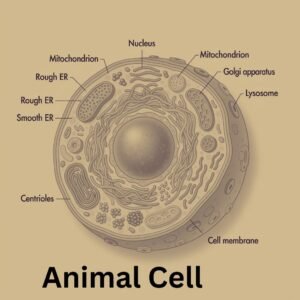
Imagine your body as a giant city with 37 trillion tiny factories working non-stop. Each factory is a **cell**, and the workers inside it are **proteins**. Without cells, proteins would never be made. Without proteins, cells would instantly die. They are completely dependent on each other—like best friends who cannot live without one another.
This is the story of the unbreakable relationship between cells and proteins.
The Cell is the Only Place Where Proteins Are Born
Proteins are not floating around in nature like water or salt. They can only be made inside living cells. Every single protein in your body—whether it is the collagen in your skin, the insulin in your blood, or the keratin in your hair—was carefully manufactured inside a cell.
The cell keeps the master plan (DNA) safely locked in the nucleus. When the body needs a certain protein, the cell opens the DNA book, copies the recipe onto mRNA, and sends it to the ribosome factory. The ribosome then builds the protein, one amino acid at a time.
So, the cell is the mother, factory, and home of every protein.
Proteins Are the Only Workers That Keep the Cell Alive
A cell without proteins is like a factory with no machines, no electricity, and no workers—it shuts down in seconds.
Everything the cell does is done by proteins:
– The cell membrane that decides what enters and leaves → made of proteins
– The enzymes that digest food and produce energy → proteins
– The pumps that maintain water and salt balance → proteins
– The motors that help the cell move or divide → proteins
– The security guards (antibodies inside immune cells) → proteins
– Even the scaffolding that gives the cell shape (cytoskeleton) → made of proteins
If all proteins suddenly disappeared, the cell would collapse and die within minutes.
It’s a Never-Ending Cycle
The relationship is not one-sided—it is a perfect loop:
- Cells make proteins using DNA instructions.
- Proteins do all the work to keep the cell alive and healthy.
- Some of those proteins repair DNA, copy DNA, and help the cell divide to make new cells.
- The new daughter cells again start making proteins.
This cycle has been running non-stop for billions of years in every living thing on Earth.
How Do Cells Make Proteins?
Cells make proteins through two main steps: “transcription “and “translation”. These processes are together called “protein synthesis”.
-
Transcription (happens in the nucleus)
The instructions for making every protein are stored in DNA, which looks like a twisted ladder. When a cell needs a certain protein, it copies the instructions from a small section of DNA (a gene) onto a molecule called messenger RNA (mRNA). Think of DNA as the master cookbook kept in a safe, and mRNA as a photocopy of one recipe taken to the kitchen.
-
Translation (happens at the ribosomes in the cytoplasm)
The mRNA travels out of the nucleus to a ribosome (the protein-making machine). The ribosome reads the mRNA recipe three letters at a time. Each set of three letters (codon) tells the ribosome which amino acid to add next. Transfer RNA (tRNA) molecules bring the correct amino acids, and the ribosome links them together into a growing protein chain.
When the ribosome reaches the “stop” codon, the finished protein is released and folds into its proper 3D shape.
This amazing process happens millions of times every day in every cell of your body!
What are the Building Blocks of Proteins?
The building blocks of proteins are **amino acids**. There are 20 different amino acids that cells commonly use. Each amino acid has a central carbon atom attached to:
– a hydrogen atom
– an amino group (-NH₂)
– a carboxyl group (-COOH)
– a unique side chain (R-group) that gives each amino acid its special properties
When amino acids join together, they form a peptide bond between the carboxyl group of one and the amino group of the next, releasing a water molecule. Long chains of amino acids are called polypeptides. A protein is usually one or more polypeptide chains folded into a specific shape.
Nine of the 20 amino acids are essential, meaning your body cannot make them—you must get them from food (meat, fish, eggs, milk, beans, nuts, etc.).
What is the structure of Protein Structure
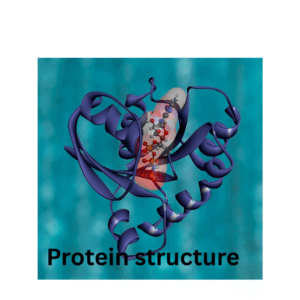
The way a protein works depends completely on its shape. Proteins have four levels of structure:
1. Primary structure
The exact sequence of amino acids in the chain is called primary structure. Even one wrong amino acid can ruin the protein’s function (like in sickle cell anemia).
2. Secondary structure
Local folding patterns caused by hydrogen bonds between nearby amino acids. The two most common are:
– Alpha helix (spiral shape, like a spring)
– Beta pleated sheet (folded back and forth like a paper fan)
3. Tertiary structure
The overall 3D shape formed when the chain folds on itself. This folding is held together by several types of bonds:
– Hydrogen bonds
– Ionic bonds (between charged side chains)
– Disulfide bridges (strong bonds between cysteine amino acids)
– Hydrophobic interactions (non-polar side chains cluster away from water)
4. Quaternary structure (only in some proteins)
When two or more separate polypeptide chains join together. For example, hemoglobin (the oxygen-carrying protein in blood) has four chains.
If a protein loses its correct shape (denatures), it stops working. This is why cooking an egg turns the clear part white—the heat denatures the proteins.
Before we find more information about Protein tell me why does the Body Need Proteins?
Your body needs proteins for almost everything:
- Growth and repair – Proteins build and repair muscles, skin, hair, nails, organs, and bones.
- Enzymes– Nearly all chemical reactions in the body need protein enzymes to happen fast enough to support life.
- Hormones – Many hormones (like insulin) are proteins that carry messages between organs.
- Immune system – Antibodies are proteins that recognize and destroy bacteria and viruses.
- Transport and storage – Haemoglobin carry oxygen; ferritin stores iron.
- Movement – Actin and myosin proteins make muscles contract.
- Structure – Collagen is the most abundant protein in the body and gives strength to skin, tendons, ligaments, and bones.
Tell me how Much Protein Do You Need per day?
For 8th–10th grade students (roughly 13–16 years old):
– Boys need about 52 grams of protein per day
– Girls need about 46 grams per day
A balanced diet with a variety of foods usually gives enough protein. Athletes or growing teenagers may need a little more.
Proteins are truly remarkable molecules. From the moment a cell reads DNA to build a protein, to the way that protein folds into exactly the right shape to do its job, everything works with incredible precision. Every heartbeat, every breath, every thought in your brain depends on proteins doing their jobs perfectly.
Understanding proteins helps us understand life itself. These tiny workers, built from just 20 types of amino acids according to instructions written in DNA, make possible everything that makes you—you.
Cell and Proteins are partners in the truest sense—creator and creation, boss and worker, house and resident—all at the same time.
The story of life is simple:
Cells build proteins. Proteins build the cell. Together, they build you.