The Teacher Is the Curriculum:
Why Faculty Matters More Than Infrastructure
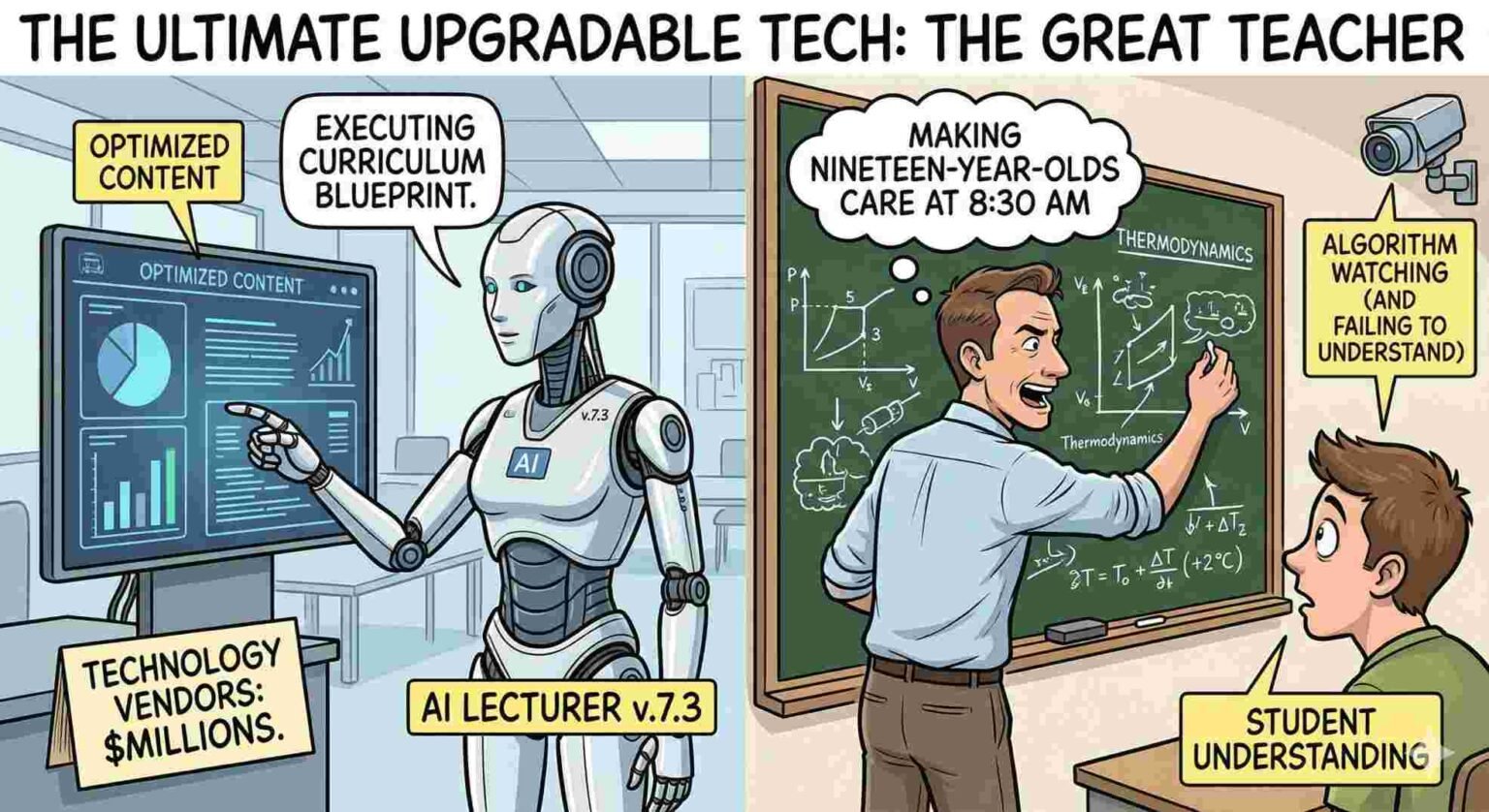
This is an uncomfortable truth that many schools spend millions trying to avoid facing: confrontation!!! You can have the most modern campus, the most high-tech smart classrooms, and an AI-powered learning management system that almost writes itself, and still have graduates who can’t figure out how to answer a multiple-choice question. None of that infrastructure matters without the one piece of technology that no vendor can sell you: a great teacher.
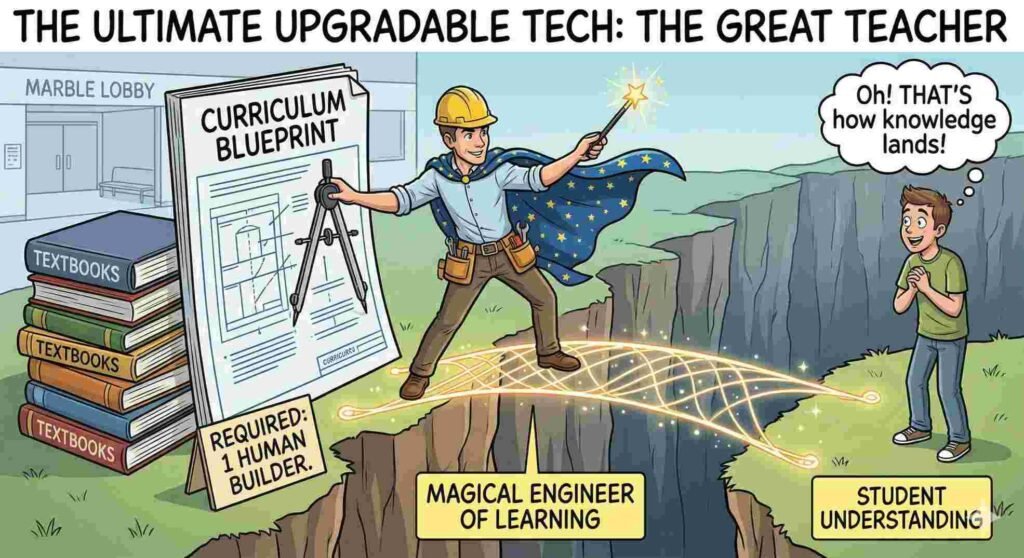
At its core, pedagogy is not about what is taught. It has to do with how knowledge gets from a textbook to a student’s actual understanding. And the bridge over that gap has always been, and will always be, a person who knows how to build it. The curriculum is the blueprint. The teacher is the architect, the engineer, and — on the best days — the magician.
The Hiring Problem Nobody Wants to Admite
If you go to any institutional planning meeting, you’ll hear people arguing passionately about things like accreditation frameworks, infrastructure upgrades, branding strategies, and placement statistics. You won’t often hear a conversation that is just as passionate about how to find, attract, and keep the right teachers who can really change a classroom.
Most hiring processes for teachers don’t work well. They put too much weight on credentials like degrees, publications, and h-index scores, and not enough on the one thing that really matters in a classroom: the ability to teach. Those are entirely different skills, and confusing the two is the original sin of faculty recruitment.
Identifying the right teacher means looking beyond the CV. It means observing how a candidate explains a concept to a room full of strangers. It means asking them how they would handle a student who is struggling, not what their publication count is. It means valuing curiosity, empathy, and the ability to improvise over the number of conferences attended. The best teachers are not always the most decorated scholars. They are the ones who make students want to show up.
Nurturing and Motivating: The Part Institutions Conveniently Skip
The education sector has a retention problem it rarely talks about honestly. Good teachers leave, and they leave for reasons that are almost embarrassingly fixable. They leave because no one invested in their growth. Because professional development meant a mandatory two-day workshop on “innovative pedagogy” that was neither innovative nor pedagogical. Because their workload was so heavy that preparing an engaging lecture became a luxury they could not afford. Because they watched less capable colleagues get promoted based on seniority while their own classroom magic went unrecognised.
Nurturing quality faculty requires treating them as professionals, not interchangeable parts. It means providing genuine development opportunities — sabbaticals, research funding, exposure to global teaching practices, mentorship from senior educators who still remember what it feels like to stand in front of a classroom. It means creating a culture where pedagogical experimentation is encouraged, not punished; where a teacher who tries a new approach and fails is celebrated for the attempt, not reprimanded for the result.
Motivation, meanwhile, is not just about money — though fair compensation is non-negotiable and institutions that underpay their faculty while overspending on marble lobbies deserve every mediocre outcome they get. Real motivation comes from autonomy, recognition, and purpose. Let teachers design their courses with creative freedom. Recognise outstanding teaching with the same enthusiasm you reserve for research output. And above all, make them feel that their work matters — that they are not just filling a timetable slot, but shaping the trajectory of young lives.

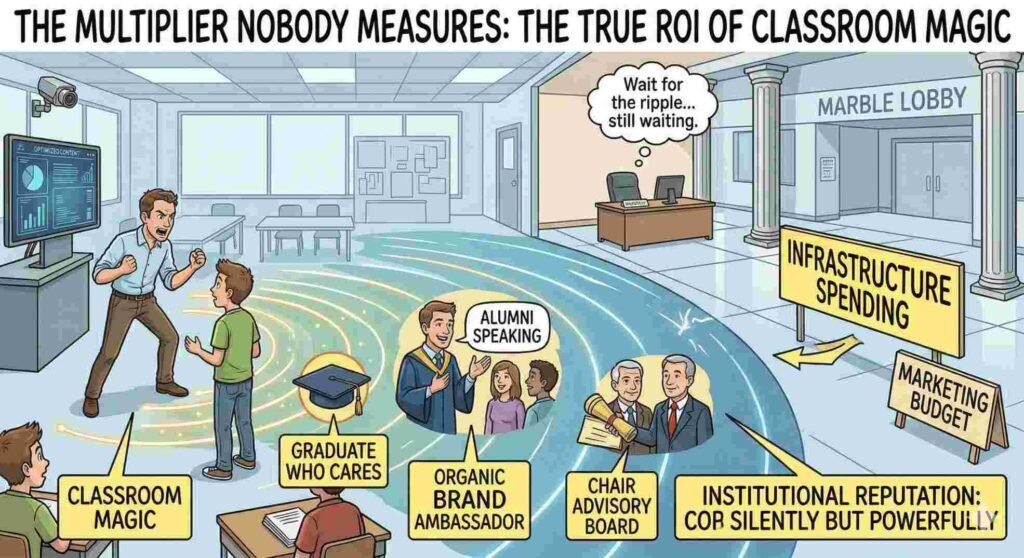
Here is where the mathematics of institutional reputation gets interesting. A great teacher does not just deliver a good lecture. They create a ripple effect that no marketing budget can replicate.
Students who are taught well become alumni who speak well of the institution — not because they were asked to, but because they genuinely mean it. They become the organic brand ambassadors that no PR agency can manufacture. They refer younger siblings, recommend the institution to colleagues, and — decades later — fund scholarships and chair advisory boards. Every outstanding teacher is, in effect, a long-term investment in institutional reputation that compounds silently but powerfully.
Conversely, every good teacher who leaves takes a piece of that reputation with them. Students notice. They talk. In the age of social media and anonymous review platforms, a revolving door of faculty is not just an HR problem — it is a brand crisis in slow motion.
Conversely, every good teacher who leaves takes a piece of that reputation with them. Students notice. They talk. In the age of social media and anonymous review platforms, a revolving door of faculty is not just an HR problem — it is a brand crisis in slow motion.
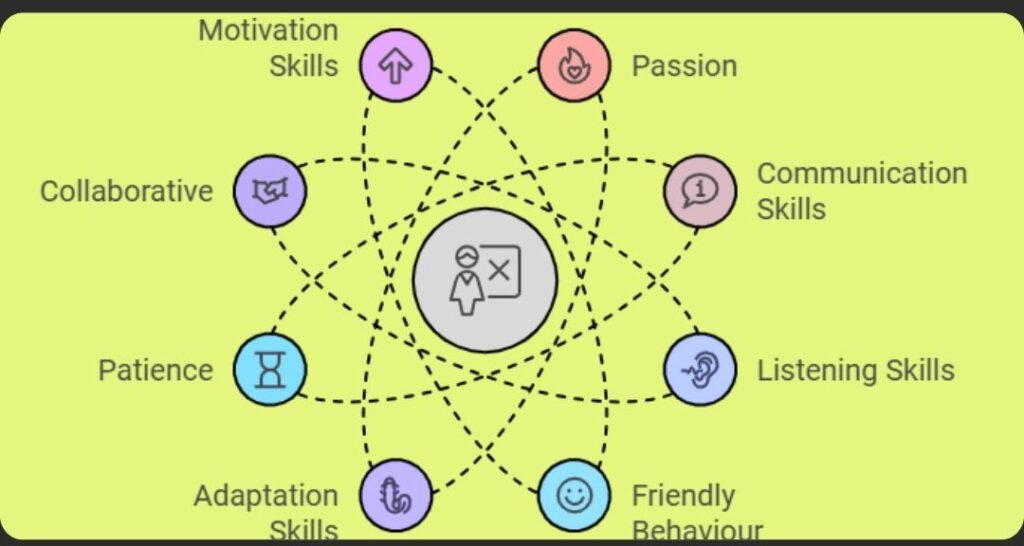
Selecting the right teachers is not a priority. It is the priority — the foundation on which every other institutional ambition rests. Get this wrong, and the smartest campus in the country becomes an expensive building where bored students attend lectures by disengaged faculty. Get this right, and even a modest institution becomes a place where minds are genuinely shaped.
The best institutions in the world did not become the best because of their buildings. They became the best because someone, somewhere, had the wisdom to invest in the people standing at the front of the room — and the humility to keep investing in them, year after year
Pedagogy is how knowledge is taught. But the teacher is why it is learned